
Best Practices for Music Promotion on TikTok and YouTube Shorts
Best Practices for Music Promotion on TikTok and YouTube Shorts
Short-form videos on TikTok and YouTube Shorts are reshaping music promotion. With billions of users and high engagement rates, these platforms let artists reach massive audiences quickly. A single 15-second clip can spark viral success, driving streams and growing fanbases without needing major label support.
Key takeaways:
- TikTok: Focus on trends, short clips (5–12 seconds), and high rewatch rates. Use captions, hashtags, and subtitles to boost engagement.
- YouTube Shorts: Emphasize completion rates (80–90%) and use SEO-friendly titles. Shorts can funnel viewers to long-form videos and music streams.
- Both platforms reward content that grabs attention in the first 2–3 seconds.
To succeed, create engaging, loopable videos, align them with your music style, and repurpose them across both platforms. Consistent posting, trend participation, and automation tools can help maintain momentum and grow your audience.
Maximizing Musicians Views on TikTok, Reels & Shorts
How TikTok and YouTube Shorts Algorithms Work
TikTok vs YouTube Shorts Algorithm Comparison for Music Promotion
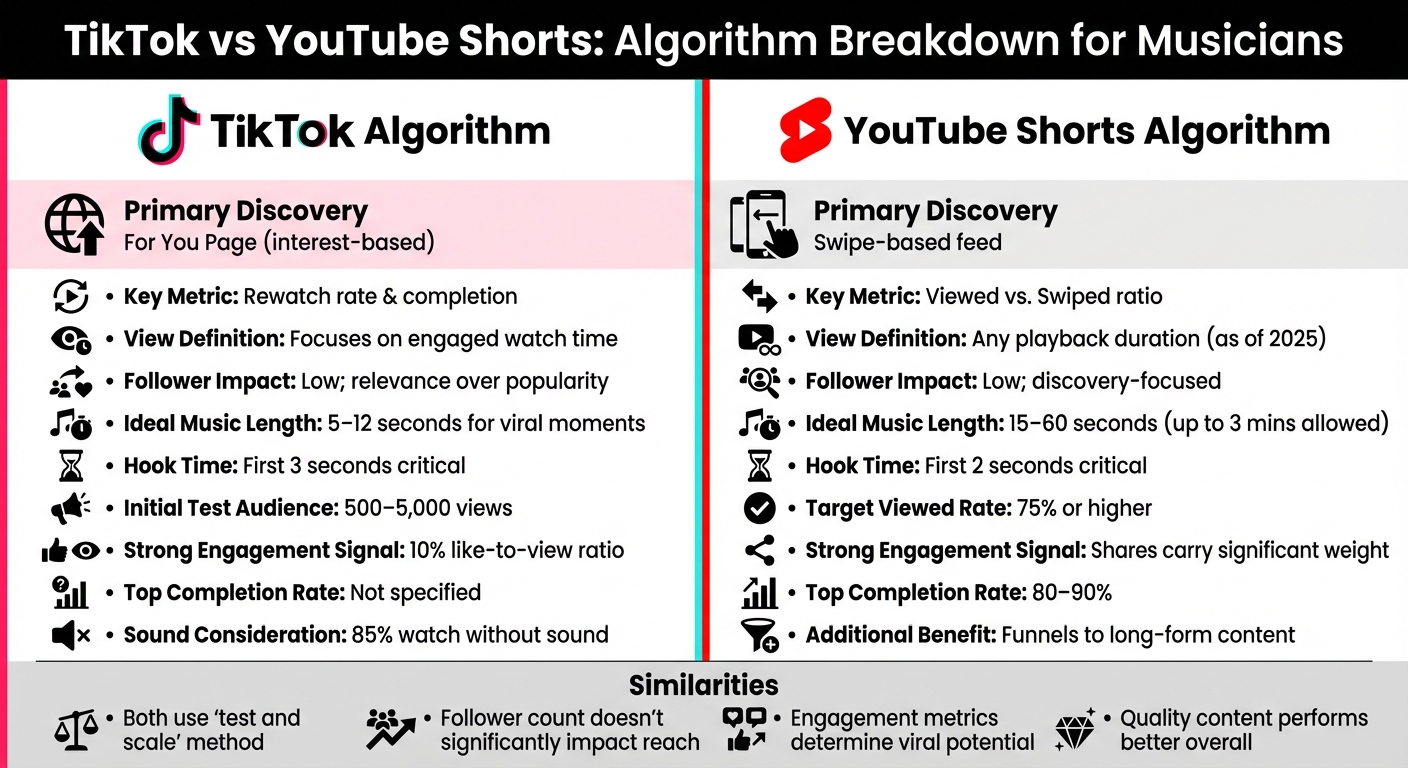
Short-form video has become a powerful tool for music discovery, and understanding how TikTok and YouTube Shorts algorithms work can make or break your reach. These platforms rely on a "test and scale" method: they show your video to a small group of users, assess their reactions, and decide whether to push it to a wider audience. The difference between a video reaching 500 people versus 5 million often comes down to how well it performs in this initial test phase.
Interestingly, follower count doesn’t play a significant role. As Julian McAuley, Professor of Computer Science at the University of California San Diego, puts it:
"There seems to be some perception that they've cracked some magic code for recommendation... What makes TikTok different is that they have fantastic volumes of data, highly engaged users, and a setting where users are amenable to consuming algorithmically recommended content."
This means even a brand-new artist account has the potential to go viral if the content resonates with viewers during the testing phase.
TikTok's Algorithm Explained
TikTok’s For You Page relies heavily on what FOF Records calls "reaction density" - a measure of how strongly users respond to a video within a short time frame. When you post a video, the algorithm shows it to a small group (typically 500–5,000 views) and tracks key engagement metrics like likes, shares, comments, watch time, and replays. Of these, user interactions carry the most weight. For example, a 10% like-to-view ratio is considered a strong signal of engagement.
Other factors, like captions, hashtags, sounds, and effects, play a secondary role. TikTok’s AI even listens for spoken keywords and scans on-screen text to categorize videos, making it crucial for musicians to include relevant keywords in their scripts, captions, and overlays.
Completion rates and rewatches are particularly important. While videos between 21 and 34 seconds tend to perform well overall, music promotion often benefits from shorter, loopable clips lasting 5–12 seconds. These clips encourage rewatches, which the algorithm rewards. In fact, FOF Records used a 5–12 second high-energy snippet of "Andale" by BigDeuceFOF in 2025, leveraging a rhythmic hook to drive over 15 million streams.
One key insight: 85% of TikTok users watch videos without sound. Adding on-screen text or subtitles can significantly boost viewer retention and engagement.
YouTube Shorts' Algorithm Explained
YouTube Shorts takes a different approach, as its content is "swipe-discovered, not click-discovered". Traditional metrics like click-through rate matter less here. Instead, the algorithm focuses on the "Viewed vs. Swiped-away" ratio - whether viewers watch your Short or swipe past it. To succeed, creators aim for a viewed rate of 75% or higher.
Todd Sherman, YouTube VP, explains:
"The algorithm is ruthless about promoting what works and burying what doesn't."
YouTube Shorts uses a two-step process. First, it "explores" by showing your video to a small seed audience. If the engagement metrics - like completion rate - are strong, it moves to the "exploit" phase, where the video is shared with a much larger audience. Completion rates are critical here, with top-performing Shorts often achieving an 80–90% completion rate. That’s why the first two seconds of your video are vital for grabbing attention.
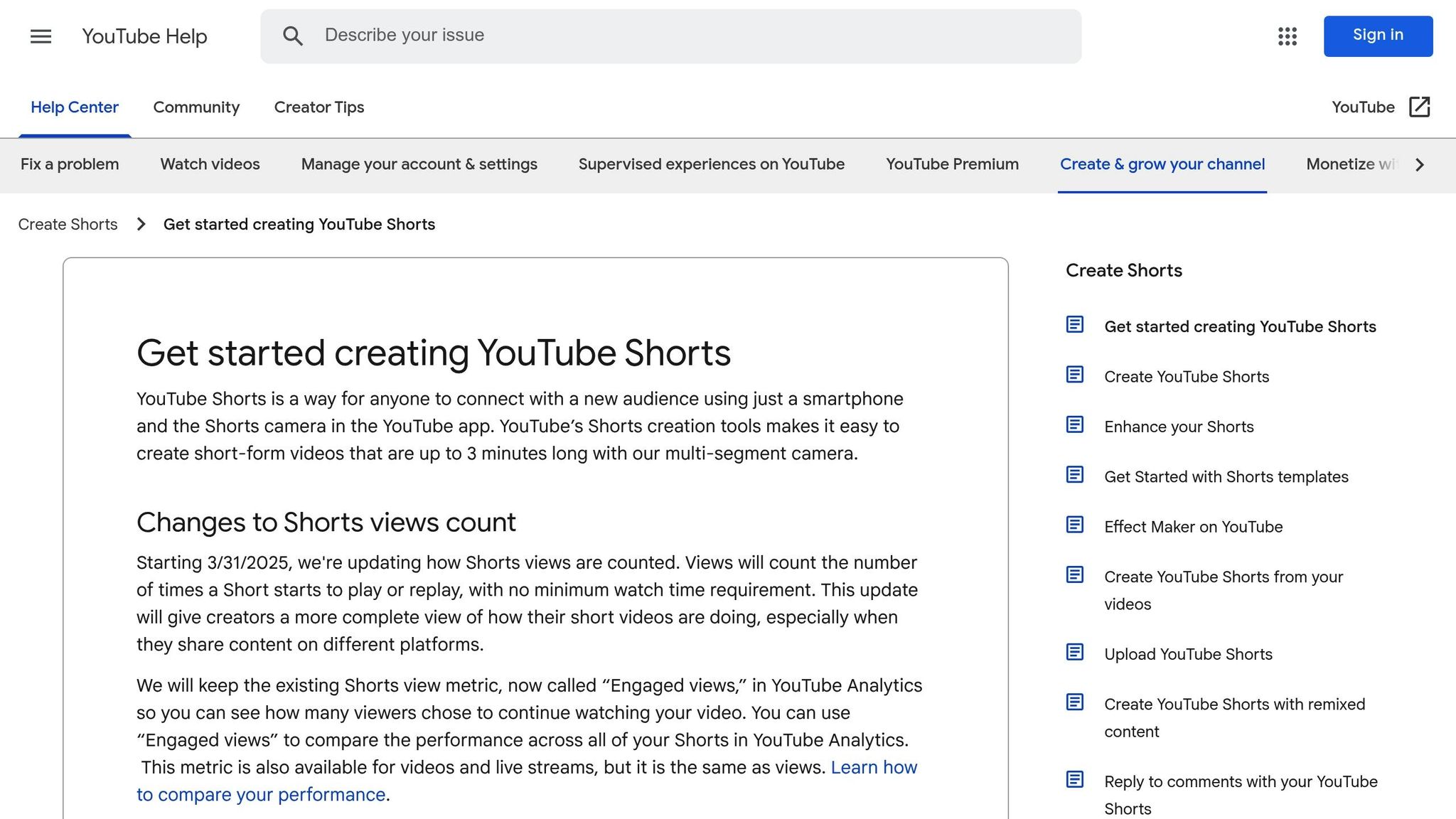
In March 2025, YouTube updated its view-counting system: any playback, no matter how brief, now counts as a view. Each loop or replay adds to the total view count as well. This change caused a 30% increase in raw view numbers, but YouTube now uses "Engaged Views" to determine monetization eligibility. Shares also carry significant weight on the platform.
| Feature | TikTok Algorithm | YouTube Shorts Algorithm |
|---|---|---|
| Primary Discovery | For You Page (interest-based) | Swipe-based feed |
| Key Metric | Rewatch rate & completion | Viewed vs. Swiped ratio |
| View Definition | Focuses on engaged watch time | Any playback duration (as of 2025) |
| Follower Impact | Low; relevance over popularity | Low; discovery-focused |
| Ideal Music Length | 5–12 seconds for viral moments | 15–60 seconds (up to 3 mins allowed) |
Both platforms reward content that grabs attention immediately - within three seconds on TikTok and two seconds on Shorts. While production quality isn’t as critical as engagement, high-quality videos on TikTok tend to perform better, with 72% more watch time per view and significantly higher follower growth compared to lower-quality uploads.
These insights highlight how creators can tailor their strategies for success on both platforms.
Content Creation Strategies for TikTok and YouTube Shorts
Creating content that grabs attention on TikTok and YouTube Shorts means nailing those crucial first seconds. These platforms often test your video with a small group before deciding if it’s worth showing to a larger audience, so the opening moments are everything.
Grab Attention in the First 3 Seconds
The first 3 seconds can make or break your video’s success. Will Harken, Founder of Music Made Pro, sums it up best:
"The First 10% Of ANY Video Is Critical. Never forget ASD: Attention. Superior. Different. Most would argue attention is more important than the later two."
Start with something unexpected - a bold visual, a surprising hook, or dynamic on-screen text. For example, The Trills, an acapella group with 2 million followers as of March 2023, excel at this. Their leader, Katie, often kicks off their videos with engaging challenges like, "Let’s see if the band can keep up!" This kind of opening builds instant curiosity and keeps viewers watching.
Text overlays are another effective tool. Make them slightly longer to read than the video’s duration to hold attention. Aim for 5–10 words per second to maintain engagement.
From there, make sure your content matches your music genre.
Match Your Content to Your Music Genre
Once you’ve hooked your audience, your content needs to align with your music style and audience expectations. Research similar artists by exploring their "Sound Detail" pages to identify which video styles and trends are boosting their visibility. Build your strategy around 3–5 content pillars that represent your brand - think hook-first performances, behind-the-scenes clips, micro-tutorials, tour life, or fan interactions.
Independent artist Lay Bankz is a great example. In May 2025, she found viral success with her song "Tell Your Girlfriend" by launching a dance challenge and hashtag, encouraging fans to participate. This approach led to a surge in video views and engagement, proving that genre-appropriate challenges can significantly expand your reach.
For optimal results, keep your videos between 11 and 15 seconds long - short enough to boost completion rates, but long enough to tell a story. If you’re promoting music, create clips that loop naturally to encourage rewatches. Always shoot in full-screen vertical format (9:16), keeping key elements within the safe zone.
Use Trends and Challenges
Once you’ve established your style, tap into trends to amplify your visibility. Trends are a powerful way to increase reach, but the key is to make them your own. Use the "2+2" rule: keep two elements from the original trend (like the theme and visuals) and change two others (such as the hashtags and sound). This keeps your content familiar yet distinct.
Stay ahead by checking #TrendAlert daily to spot emerging sounds and formats before they peak. Pair trending hashtags with evergreen ones like #BehindTheSong, #InTheStudio, or genre-specific tags like #AltMusic or #GuitarSolo. These evergreen tags help maintain steady discoverability even after trends fade. In fact, by 2024, 84% of songs that charted on the Billboard Global 200 had gone viral on TikTok first.
Platform features like Duets and Stitches let you collaborate with or react to trending videos, giving you access to the original creator’s audience. When a video starts gaining traction, don’t hesitate to boost it. For instance, in 2024, an artist managed by iGroove grew from 2,400 to 93,000 monthly Spotify listeners in just 28 days by identifying early momentum and amplifying it strategically.
Above all, focus on authenticity. As Ditto Music emphasizes:
"Authenticity & group participation is more important than getting the perfect shot"
Rather than chasing perfection, aim to create genuine moments that resonate with your audience. Authenticity is what keeps people coming back.
sbb-itb-e87b2af
Platform-Specific Best Practices
To get the most out of your music promotion efforts, it’s essential to adapt your strategies for each platform. Let’s dive into how TikTok and YouTube Shorts can help you reach new listeners.
TikTok: Riding Trends and Simplifying Content Creation
TikTok is all about spontaneous discovery, especially through its For You Page. The platform’s algorithm is laser-focused on personalizing content for each user, making it a powerful tool for music promotion. To stand out, musicians should focus on being authentic rather than overly polished. And if keeping up with daily uploads feels overwhelming, tools like SoundRise can help. These tools can create genre-specific, faceless videos and schedule them automatically, so your content keeps flowing without constant effort.
Switching to an Artist Account is a smart move. It lets you pin videos to your "Sound Detail" page, ensuring you’re front and center when people explore your track. This feature gives you more control over how fans engage with your 15–30 second snippets. To boost visibility even further, consider using Spark Ads. They’re an affordable way to amplify trending videos, with cost-per-clicks ranging from just $0.01 to $0.06.
While TikTok thrives on quick trends, YouTube Shorts offers a different set of benefits, especially when it comes to long-term engagement.
YouTube Shorts: Boosting Visibility and Keeping Fans Engaged
YouTube Shorts has a unique edge thanks to its connection with YouTube’s powerful search engine and long-form content. Unlike TikTok, which relies heavily on hashtags, YouTube Shorts benefits from strong SEO. Using descriptive, keyword-rich titles - like "Official Music Video" or "Lyric Video" - can make your content easier to find. As Azfar from SoundCamps puts it:
"YouTube isn't just where people watch cat videos. It's where over 2 billion users discover their next favorite track."
One of the biggest advantages of YouTube Shorts is its ability to funnel viewers toward your full-length videos, album streams, and even channel subscriptions. In fact, early 2023 data showed that fan-created Shorts increased the average artist’s unique viewers by over 80%. You can also use the Community Tab to keep your channel active between uploads. Simple polls like “Which track should I drop next?” can spark engagement and signal to the algorithm that your channel is buzzing.
For major releases, YouTube Premieres can turn your video drops into live events, complete with real-time chat. This approach not only builds excitement but also sends strong engagement signals right out of the gate. And unlike TikTok’s fast-paced trends, YouTube content has a longer shelf life, thanks to its search and recommendation features, making it a great platform for ongoing discovery.
Distributing and Scheduling Content Across Platforms
Once you've nailed down your content strategy, the next step is ensuring it reaches the right audience at the right time. Distribution is the bridge between creation and engagement, and doing it efficiently can keep your momentum going strong.
Creating Content Once and Repurposing It
Start with a single, high-quality 9:16 video and repurpose it for multiple platforms - just make sure it’s watermark-free. Shoot your video in 9:16 (1080x1920 resolution), export it without watermarks, and tweak the captions and hashtags to fit each platform's vibe.
- TikTok: Keep captions short (under 150 characters) and use 3–5 hashtags that mix trending and niche tags.
- YouTube Shorts: Craft keyword-rich titles (up to 60 characters) that start with the most important terms, and include 2–3 hashtags - don’t forget to add #Shorts.
By repurposing your content like this, you can potentially boost your views by 5–10× compared to sticking to just one platform.
Timing matters, too. Space out your uploads by 3–7 days to prevent overwhelming your audience. Aim for peak times: TikTok performs well on weekdays from 7–9 PM and 11 AM–1 PM EST, while YouTube Shorts thrives between 2–4 PM and 9–11 PM EST.
Once your content is ready and adapted for each platform, make the process even smoother by automating your posting schedule.
Automating Your Posting Schedule with AI Tools
Automation can save you time and energy, letting you focus on what you do best - creating. Tools like SoundRise make it easy to generate genre-specific, faceless TikTok videos and schedule posts automatically. This ensures your content keeps flowing, even when life gets busy.
Jesse Cannon from Musformation sums it up perfectly:
"The 'consistent' part usually falls apart when you don't have content ready ahead of time. Life happens... but if you've prepared your content in advance, your promotion keeps running".
Let tools like SoundRise handle the logistics while you stay focused on making music.
Building Your TikTok and YouTube Shorts Strategy
A solid strategy for TikTok and YouTube Shorts starts with the Hook-Body-CTA framework. The hook grabs attention within the first 3–5 seconds, the body delivers value through storytelling or performance, and the CTA directs viewers to take action - whether that's streaming your content or hitting the follow button. This straightforward structure keeps your videos focused and effective across both platforms.
When planning your content, think in phases. Before a release, aim to build excitement with behind-the-scenes clips, live teasers, or quick how-to videos. After the release, shift gears to encourage engagement through user-generated content, fan shoutouts, and active sound page management. For example, in 2022, musician Sophie Holohan used TikTok to share her self-produced "butterfly effect - demo", sparking a viral trend where over 30,000 users shared personal stories using her song. This success built on the momentum of her earlier viral hit "Codependent", which ultimately landed her a record deal.
Both platforms thrive on authentic, unpolished content. Spontaneous, relatable videos often outperform high-budget productions. Take Em Beihold's heartfelt snippet about her experience with antidepressants - it racked up 7.1 million views and 1.6 million likes in early 2022, showing how genuine storytelling can deeply connect with audiences.
To sustain this kind of engagement at scale, automation can be a game-changer. Tools like SoundRise create genre-specific TikTok videos and schedule posts automatically, helping you maintain a consistent presence across platforms. With TikTok boasting 1 billion active users and YouTube Shorts reaching 1.5 billion monthly logged-in users, regular and automated posting is crucial to tap into these massive audiences.
Here’s another key insight: the top 25% of U.S. adult TikTok users generate 98% of the platform's content. This means there’s plenty of room for fresh creators to make an impact. Establish a rhythm with themed posting days - like "Music Mondays" or "Behind-the-Scenes Thursdays" - to stay active in algorithmic feeds. Consistency, combined with authentic storytelling and automation, can amplify your reach. Don’t forget platform-specific tricks, like using the #Shorts hashtag on YouTube and trend-driven hashtags on TikTok, to optimize your visibility.
FAQs
How can new artists go viral on TikTok without having many followers?
New artists have a real shot at going viral on TikTok, even without a massive follower base. Thanks to TikTok's content-first algorithm, it’s all about creating videos that grab attention and keep viewers engaged. Here’s how you can make the most of it:
- Hook viewers immediately: The first 3 seconds are crucial. Start with a strong hook and aim for videos between 20–35 seconds to increase watch time.
- Use searchable keywords: Incorporate clear, relevant keywords in your captions, on-screen text, and voiceovers. This helps TikTok match your content with the right audience.
- Put a spin on trends: Jump on popular trends, but don’t just copy - add your own twist to stand out from the crowd.
- Boost interaction: Encourage engagement by asking questions in your captions, responding to comments, and staying active with your audience. This signals TikTok that your content is gaining traction.
If creating content feels like a time sink, tools like SoundRise can step in to help. SoundRise uses AI to produce genre-specific, faceless TikTok videos. You can customize visuals, schedule posts, and maintain a steady stream of content, making it easier to connect with more users and increase your chances of going viral.
How do TikTok and YouTube Shorts algorithms differ when promoting music?
TikTok’s algorithm thrives on instant engagement. If your video grabs attention within the first 3 seconds and racks up likes, shares, and solid watch time, it has a shot at going viral - even if you’re just starting out with little to no followers.
YouTube Shorts, however, takes a different approach. Its algorithm leans heavily on the creator’s overall channel performance. Factors like subscriber count and watch history play a big role. While this means your content might not blow up as quickly, it often sets the stage for steadier, long-term growth.
How can I use trends and challenges on TikTok and YouTube Shorts to promote my music?
Trends and challenges can be game-changers when it comes to promoting your music on TikTok and YouTube Shorts. By tapping into popular sounds, hashtags, and viral formats, you can quickly get your music in front of a massive audience.
Start by keeping an eye on TikTok’s “Discover” tab and YouTube Shorts’ trending section. These areas are goldmines for spotting what’s hot. When you find a trend that aligns with your song, pair your track’s most captivating 2–3 seconds with the theme of the challenge. Don’t forget to use the exact hashtag and trending sound linked to the challenge - this step is key to boosting your visibility.
If you’re short on time, tools like SoundRise can simplify the process. They help you create genre-specific, faceless videos that fit the trend, allowing you to post while the trend is still fresh. You can even repurpose this content for YouTube Shorts by uploading it with the #Shorts tag and tweaking the thumbnail to suit the platform.
Once your video is live, dive into performance metrics like watch time and audience retention. These insights will show you which platform is driving the most engagement. Use this data to fine-tune your approach and keep riding the wave of new trends to maintain momentum for your music.