
How TikTok Hashtags Boost Music Reach
How TikTok Hashtags Boost Music Reach
TikTok hashtags are a powerful tool for musicians to connect with audiences and increase their reach. With over 1.6 billion monthly active users, TikTok's algorithm relies heavily on hashtags to categorize content and deliver it to the right viewers. Here's what you need to know:
- Hashtags act as SEO for TikTok, helping your videos appear in searches and reach niche communities.
- Using a mix of broad, niche, and branded hashtags can improve visibility and engagement.
- Research shows niche hashtags like #IndieArtist or #LofiMusic drive 60–70% higher engagement compared to generic tags.
- Tools like SoundRise automate hashtag research, suggest optimal tags, and track performance, saving time for musicians.
To succeed, focus on:
- Trending hashtags for broad exposure.
- Niche hashtags to connect with specific audiences.
- Branded hashtags to build your identity.
A balanced hashtag strategy can turn casual viewers into loyal fans, making TikTok an essential platform for music promotion.
How TikTok Hashtags Work
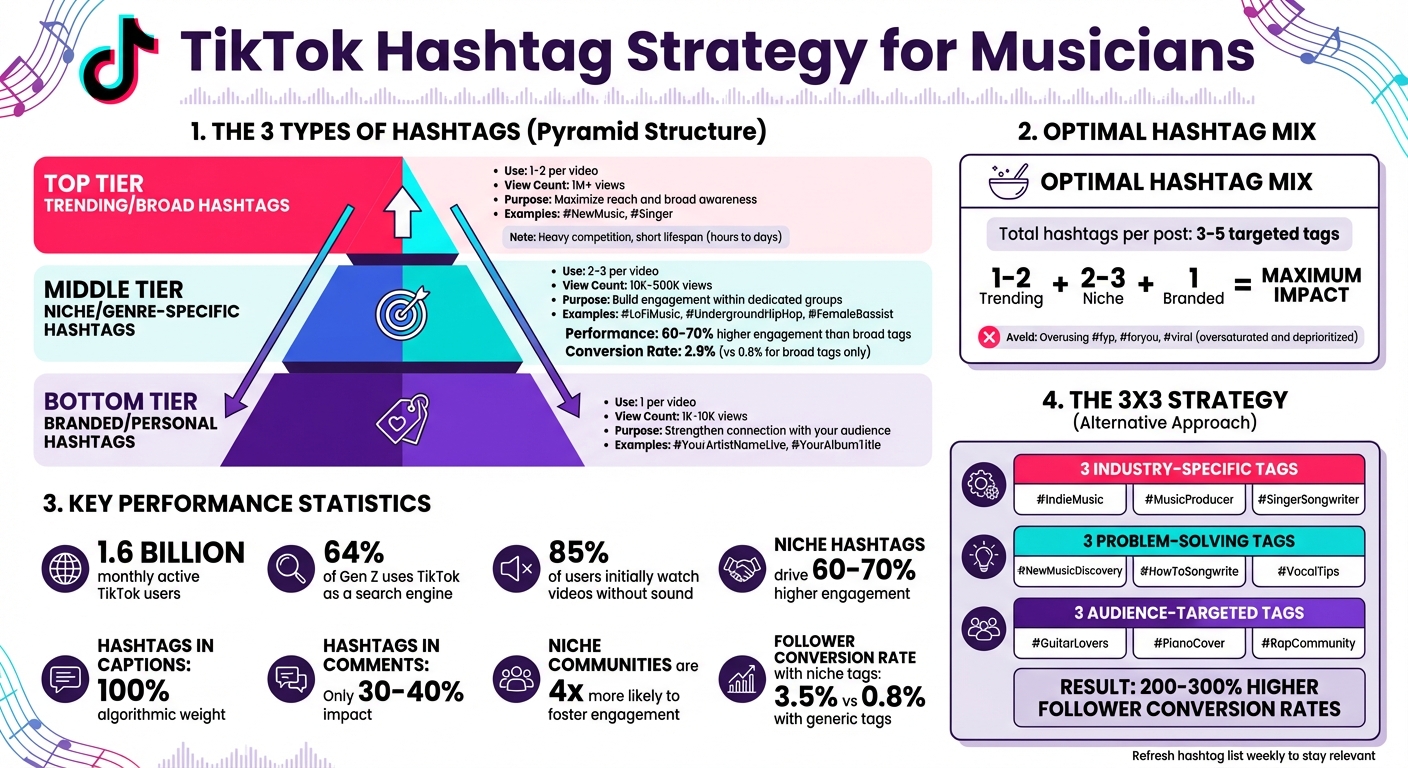
TikTok Hashtag Strategy Guide for Musicians: Types, Quantities, and Performance Metrics
On TikTok, hashtags act as signals that help categorize your video and connect it with the right audience. When you include specific hashtags in your post, TikTok uses them to place your content into relevant topic clusters and communities where it has the highest chance of resonating.
When your video is published, TikTok initially shows it to a small, targeted group of users. If this audience engages with your content, the platform expands its reach. On the flip side, poor engagement limits its visibility. This system creates opportunities for musicians, as TikTok's algorithm in 2026 focuses more on content relevance than follower count. This means even emerging artists can reach large audiences by using effective hashtags and creating engaging videos. Beyond hashtags, TikTok also analyzes keywords from captions, on-screen text, and spoken words to enhance its categorization process. Understanding this categorization is key to leveraging the platform's algorithm for better reach.
How Hashtags Affect TikTok's Algorithm
Hashtags are a critical factor in how TikTok's algorithm identifies and distributes content. While other elements like watch time, likes, and shares also play a role, hashtags are the primary tool for guiding your content's initial visibility. From there, the algorithm refines its distribution based on deeper engagement metrics.
Focus on using hashtags in captions, as they carry full weight with the algorithm, compared to hashtags in comments, which only have 30–40% of the impact. With 85% of TikTok users initially watching videos without sound, text-based signals like hashtags and captions are essential for accurate categorization.
Hashtags also allow the algorithm to target specific subcultures. For instance, communities like #MusicTok, #Songwriter, or #IndieRock are four times more likely to foster community engagement. This is why niche hashtags, which typically have 10,000 to 500,000 views, tend to generate 60–70% higher engagement rates compared to broader trending hashtags.
3 Types of Hashtags Musicians Should Use
Musicians can amplify their reach and engagement by strategically combining three types of hashtags:
- Trending or Broad Hashtags: These tags, with 1M+ views, are designed to maximize reach. Examples like #NewMusic or #Singer place your content in large discovery pools where the algorithm tests it with wider audiences. However, these hashtags face heavy competition and have short lifespans, often lasting just hours or days. Aim to use 1–2 of these per video.
- Niche or Genre-Specific Hashtags: With 10K–500K views, these hashtags connect you with dedicated subcultures. Tags like #LoFiMusic, #UndergroundHipHop, or #FemaleBassist attract users interested in specific sounds. Combining one broad hashtag with four niche hashtags can boost follower conversion rates to 2.9%, compared to just 0.8% for videos using only broad tags like #fyp. Use 2–3 niche tags per video for the best results.
- Branded or Personal Hashtags: These are unique to your artist identity or a specific campaign, such as #YourArtistNameLive or #YourAlbumTitle. With 1K–10K views, these tags help build a searchable identity and track user-generated content. Include one branded hashtag per video.
For optimal results, use 1–2 trending hashtags, 2–3 niche hashtags, and 1 branded hashtag per post, keeping your total between 3–5 targeted tags. This balanced approach helps the algorithm focus on your niche without overwhelming it. Avoid overusing generic tags like #fyp, #foryou, and #viral, as they are oversaturated and may be deprioritized by the algorithm.
| Hashtag Type | Quantity | View Count Range | Purpose |
|---|---|---|---|
| Trending/Broad | 1–2 | 1M+ views | Maximize reach and broad awareness |
| Niche/Specific | 2–3 | 10K–500K views | Build engagement within dedicated groups |
| Branded | 1 | 1K–10K views | Strengthen connection with your audience |
How SoundRise Automates TikTok Hashtag Strategies
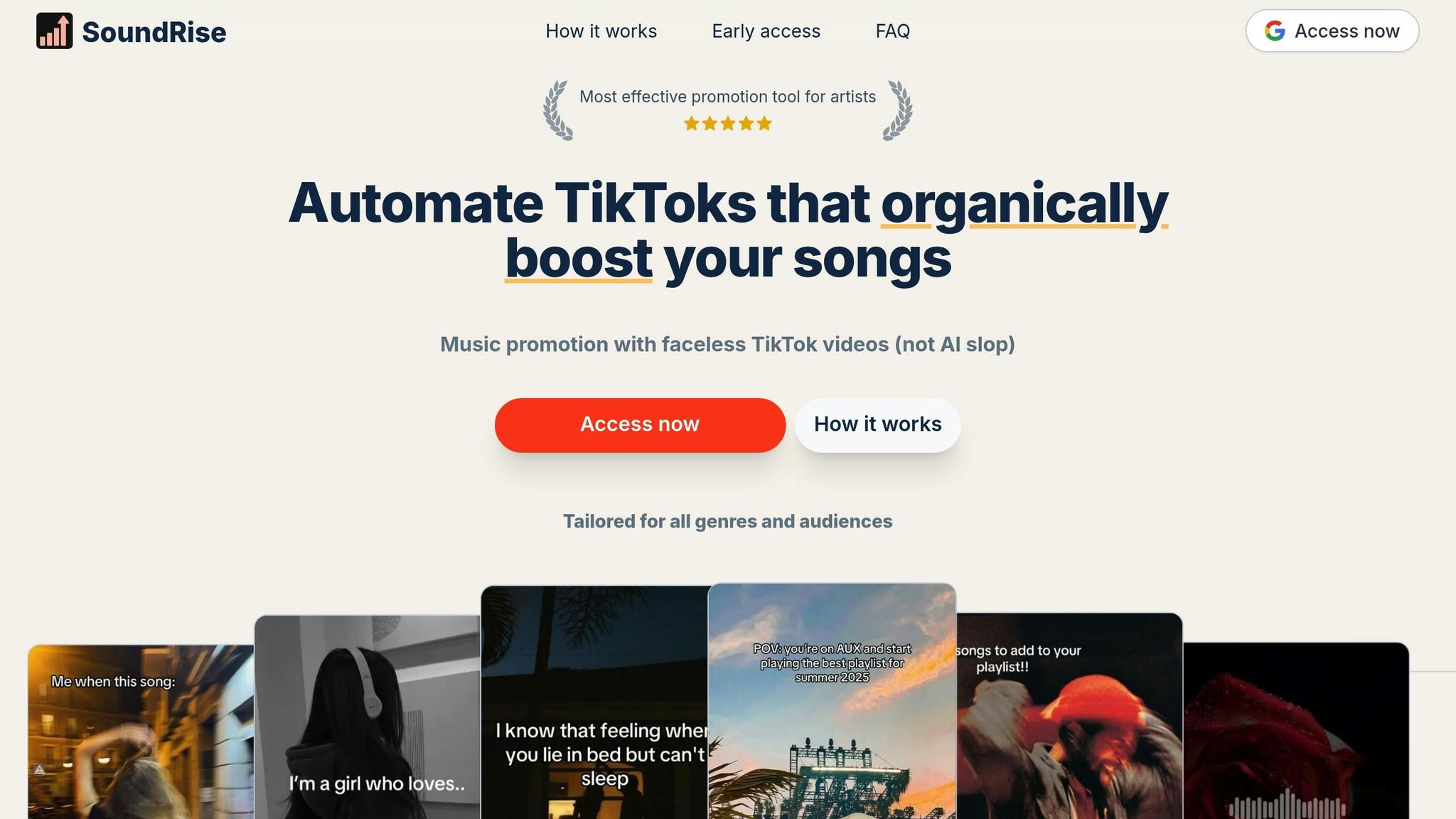
Musicians often find themselves torn between crafting their art and navigating the time-consuming task of researching hashtags. SoundRise steps in to solve this dilemma by using AI to analyze the context of your music and generate hashtag strategies that align seamlessly with TikTok's algorithm. This allows artists to focus on their creativity while ensuring their content gets the targeted promotion it deserves.
What makes SoundRise stand out is its ability to predict hashtag performance with over 75% accuracy. It achieves this by analyzing millions of data points from similar creator accounts. Instead of relying on guesswork, SoundRise provides precise recommendations, helping you choose between, say, a trending pop hashtag and one geared toward underground hip-hop. The platform leverages real-time trend analysis, competitor insights, and performance metrics to identify impactful tags for your specific music genre. By detecting "category signals", the AI ensures that TikTok's algorithm connects your content with the most relevant audience clusters.
Automated Hashtag Research by Genre
SoundRise's AI doesn’t just stop at general recommendations. It dives deep into your video descriptions, song themes, and genre to create hashtag suggestions tailored to your niche. Forget about manually tracking trends - the platform monitors real-time search volumes and even considers the seasonal popularity of hashtags.
The system uses the "Pyramid Mix" strategy to balance broad, trending tags with niche and ultra-niche hashtags. For instance, a folk musician might use a trending tag like #NewMusic alongside niche tags such as #FolkSinger and #AcousticVibes, and then add an ultra-niche tag like #IndependentFolkArtist. This mix has been shown to increase engagement rates by 60–70% compared to relying solely on broad tags.
Combining Hashtags with Video Creation
SoundRise takes its automation a step further by integrating hashtag research directly into its video creation tools. This ensures that the chosen hashtags align perfectly with your video's elements, such as sounds, effects, and on-screen text, for maximum SEO impact. Whether you're creating a lyric video or a slideshow, the AI suggests hashtags that complement your captions and visuals.
With 64% of Gen Z users treating TikTok as a search engine, matching hashtags with your video’s captions and visuals significantly boosts the chances of your music appearing in feeds and search results. SoundRise also includes scheduling tools that automate posting at optimal times, ensuring your content maintains consistent visibility.
Step-by-Step Guide to TikTok Hashtag Strategies
Let’s dive into how you can fine-tune your TikTok hashtag strategy using insights from SoundRise’s automated tools.
Finding Trending and Niche Hashtags
The TikTok Creative Center is your go-to resource for spotting effective hashtags. This free tool lets you filter hashtags by industry, region, and timeframe - whether you’re looking at trends from the past week, month, or even 120 days. Pay attention to "Trend Velocity", which highlights hashtags growing quickly in popularity. This is far more useful than sticking with high-volume tags that are already oversaturated.
Try the Pyramid Mix strategy to balance your reach and engagement:
- 1–2 trending tags (over 1M views) for broad exposure.
- 2–3 niche tags (10K–500K views) to connect with specific audiences.
- 1 ultra-niche tag (1K–10K views) for deeper community engagement.
This mix can boost engagement by 60–70% compared to using only broad hashtags. Another trick? Type your genre keyword into TikTok’s search bar and check the autocomplete suggestions. These often reveal hashtags in the "sweet spot" range of 100,000–1 million views.
Before you post, make sure your hashtags are safe. Tools like IQhashtags can help you avoid banned or shadowbanned tags, which are risky to use. For example, spammy tags like #followme or #like4like could hurt your visibility. Since TikTok trends shift quickly, refresh your hashtag list weekly to stay relevant.
Once you’ve nailed down trending and niche hashtags, it’s time to create a branded hashtag that reflects your music and identity.
Creating and Tracking Branded Hashtags
A branded hashtag is more than just a tag - it’s your digital signature. It should be easy to remember, simple to spell, and clearly tie back to your music. Whether it’s your artist name, an album title, or a catchy lyric, this hashtag can become a powerful tool for user-generated content that spreads your music organically.
Pair your branded hashtag with a 15-second snippet of your song that’s perfect for TikTok - think danceable beats or unforgettable lyrics. Promote the hashtag across all your platforms, not just TikTok, to ensure maximum exposure. Interestingly, more than half of the returns from branded hashtag challenges come from organic views months after the campaign ends.
To measure your success, use TikTok Pro Analytics. Track metrics like follower growth, video views, and audience demographics tied to your branded hashtag. And don’t forget to engage with fans who use it - reply to their videos or duet with them. This interaction boosts your content’s visibility by signaling to TikTok’s algorithm that it’s generating meaningful engagement.
Testing Different Hashtag Combinations
Once your hashtag lineup is ready, it’s time to refine it through testing. A/B testing is a must. Post similar content but vary the hashtag sets, then compare metrics like views, watch time, and engagement to see which combinations perform best. Be sure to only change the hashtags to isolate their impact.
For a well-rounded approach, try the 3x3 Strategy:
- 3 industry-specific tags (e.g., #IndieMusic).
- 3 problem-solving tags (e.g., #NewMusicDiscovery).
- 3 audience-targeted tags (e.g., #GuitarLovers).
This method can lead to 200–300% higher follower conversion rates compared to generic tags like #FYP.
Make it a habit to review your analytics weekly. Identify the weakest 20% of your hashtags and swap them out for fresh trending or niche options. Also, remember placement matters: hashtags in your caption carry full algorithmic weight, while those in the first comment only contribute 30–40%. For the best results, stick to 3–5 highly relevant hashtags instead of overloading your caption.
sbb-itb-e87b2af
Measuring Hashtag Performance with SoundRise Analytics
Testing hashtags is just the beginning - what really matters is tracking their performance. This is where SoundRise's analytics dashboard steps in, consolidating your TikTok data to show which hashtags are driving results and which ones aren’t pulling their weight.
Key Metrics to Track
SoundRise Analytics helps you fine-tune your hashtag strategies by linking performance data directly to automated video scheduling.
- Completion Rate: TikTok ranks this as its top factor for video performance. A Completion Rate above 70% can significantly boost Watch Time, signaling strong engagement and increasing your reach. Shorter videos (7–10 seconds) tend to hit completion rates of 75–85%, while longer videos (around 60 seconds) often see rates drop to 25–40%.
- Shares: Shares are a high-intent interaction that can greatly amplify your reach. A good benchmark is a share rate of 2–5% of your total views.
- Engagement Velocity: This measures how quickly likes, comments, and shares accumulate within the first three hours of posting. A strong velocity can improve your chances of landing on the For You Page.
- Follower Conversion Rate: This tracks how effectively casual viewers turn into followers. Research involving 10,000 videos found that niche hashtags achieved a 3.5% conversion rate, compared to only 0.8% for generic tags like #fyp.
- Profile Views: This metric shows how many viewers are curious enough to check out your profile, while the Full Video Watch Rate measures the percentage of viewers who stay until the very end.
SoundRise Analytics also offers 7-day velocity metrics, which highlight trending hashtags so you can act quickly. You can even compare your performance to similar artists to see how you stack up.
Armed with these insights, SoundRise helps you scale your TikTok strategy with flexible pricing plans designed for different stages of growth.
SoundRise Pricing Plans for Different Growth Stages
SoundRise offers three pricing tiers, tailored to fit your growth needs:
- Starter Plan: At $19/month, this plan includes 20 video exports, unlimited slideshow drafts, and full access to the content library.
- Growth Plan: For $49/month, you get 50 video exports per month along with direct TikTok publishing and video scheduling - ideal for artists ready to expand their reach.
- Custom Plan: Designed for agencies or established artists managing multiple accounts, this plan is customized based on specific requirements.
All plans come with unlimited TikTok account connections and team member access. With SoundRise automating both hashtag research and video creation, you can immediately act on insights by scheduling content that connects with the right audience at the right time.
Conclusion
TikTok presents an incredible opportunity for musicians, and hashtags are the key to unlocking its potential. With 41% of Americans and 64% of Gen Z using TikTok as a search engine, the right hashtags can help your music find its audience. They guide the algorithm, ensuring your content reaches listeners who are most likely to engage with it.
Using niche hashtags instead of generic ones can significantly boost your visibility and help turn viewers into loyal fans. But let’s be honest - manually researching and testing hashtags takes up far too much time.
That’s where SoundRise comes in. This platform simplifies the process by automating hashtag research, video creation, and performance tracking. Its genre-specific targeting and analytics dashboard ensure your content is not only optimized but also reaches the right audience at the perfect time. As mentioned earlier, automating these tasks allows you to focus on creating music while leaving the promotion to smart technology.
Starting at just $19/month, SoundRise transforms hashtag strategy from trial and error into a precise, data-driven tool for growth. Give your music the audience it deserves with the power of SoundRise.
FAQs
What’s the best way for musicians to use TikTok hashtags to grow their audience?
Musicians can expand their reach on TikTok by using a mix of trending hashtags, niche-specific hashtags, and branded hashtags. Trending hashtags, which you can find in TikTok's Discover tab, are great for connecting with a larger audience. On the other hand, niche-specific hashtags, like #hiphop or #indie, help artists target listeners who are already interested in their genre or style.
Branded hashtags take it a step further by creating a sense of community. For example, a custom hashtag for a song or campaign can inspire fans to participate in challenges or share their own content. This not only increases engagement but also strengthens the bond between the artist and their audience.
By thoughtfully combining these hashtag types, artists can improve their chances of landing on the For You Page (FYP), where they can attract both new fans and loyal followers. The trick lies in selecting hashtags that genuinely reflect the artist's music, audience, and overall goals.
How does SoundRise help musicians use TikTok hashtags effectively?
SoundRise makes navigating TikTok hashtags a breeze by providing tools to craft engaging, genre-focused videos and offering a content library for hashtag ideas. It also streamlines the process with automated post scheduling, helping musicians enhance their visibility and grow their audience naturally. This allows artists to concentrate on creating music while SoundRise takes care of the promotional logistics.
Why do niche hashtags work better than broad ones for promoting music on TikTok?
Niche hashtags work wonders for promoting music on TikTok because they help you connect with a specific, engaged audience. Unlike broad hashtags that draw in a general crowd, niche hashtags make sure your videos are seen by people who are genuinely into your music genre or style. This kind of targeted reach often results in better engagement and more meaningful interactions with potential fans.
TikTok’s algorithm thrives on categorizing content, and hashtags play a key role in matching videos with the right communities. By using hashtags that align closely with your music, you’re increasing the likelihood of being discovered by the right audience, which can drive organic growth. To maximize your reach, try combining niche hashtags with trending or popular ones - this way, you get the best of both worlds: targeted visibility and broader exposure.