
How TikTok Sounds Impact Algorithm Performance
How TikTok Sounds Impact Algorithm Performance
TikTok's algorithm heavily relies on audio to determine content visibility. Sound selection accounts for 25% of the ranking process, matching the weight of captions and hashtags combined. Videos with background music see 98.31% more views, and 73% of users admit stopping to watch content based on its audio. Trending sounds boost reach by 47%, while original sounds improve brand recall by 68%.
Key Takeaways:
- Trending sounds drive short-term visibility but have a 1–3 week lifespan.
- Original sounds offer long-term impact, building stronger audience connections.
- TikTok categorizes content by sound, grouping videos and targeting audiences based on shared audio preferences.
- Tools like TikTok’s Creative Center and third-party platforms (e.g., Tokchart) help identify trending sounds early.
Using the right sound, matched to your niche and audience, can maximize engagement and algorithmic reach. Timing is critical - join trends early, or focus on original sounds for lasting impact.
THE TIKTOK ALGORITHM EXPLAINED | Your 2025 Guide To TikTok Success!
How Sounds Affect TikTok's Algorithm
Trending vs Original Sounds on TikTok: Performance Comparison
How TikTok Groups Content by Sound
When you upload a video to TikTok, the platform analyzes your audio track. This process helps the algorithm understand your content and assign it to specific categories. Think of it like a filing system - once you use a particular audio track, TikTok groups your video with others using the same sound.
Here’s where it gets interesting: if three or more users interact with the same sound or video, the algorithm creates a unique interest group for them. From then on, TikTok serves similar audio-based content to everyone in that group. Essentially, your video doesn’t just reach random viewers - it’s targeted to people who’ve already shown interest in that specific sound.
"The TikTok algorithm pairs viewers with videos, ensuring that the right content is shown to the right audience." - Epidemic Sound
Audio is classified as "Video Information" by the algorithm, carrying about 25% of the weight in TikTok's recommendation system. That’s the same combined weight as captions and hashtags, making your sound choice a critical factor in boosting your video’s visibility.
This categorization explains why trending sounds often get a boost in the algorithm, as detailed in the next section.
Trending vs. Original Sounds: What the Algorithm Prefers
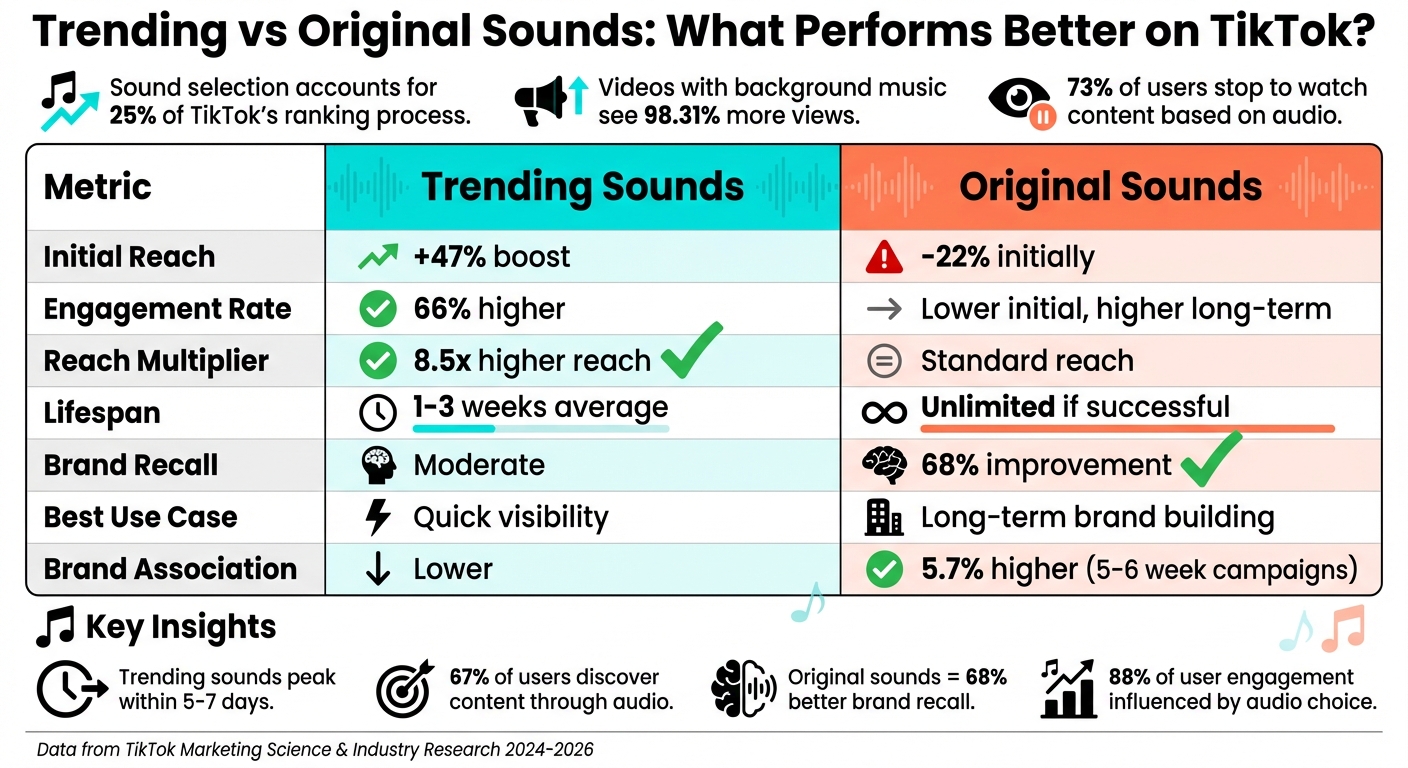
When it comes to trending versus original sounds, the algorithm treats them differently - and the results can vary significantly. Trending sounds can increase your content's reach by up to 47% compared to videos without strategic audio choices. TikTok actively promotes trending sounds because they already have proven engagement metrics.
In fact, videos using trending audio can achieve 8.5x higher reach than those with original sounds. This happens because trending sounds come with built-in distribution networks. Your video gets grouped with others using the same sound, increasing its visibility on the For You Page.
Original sounds, on the other hand, face a tougher start. They typically see 22% lower reach initially. But there’s a silver lining - original sounds deliver 68% better brand recall and don’t have the short shelf life of trending sounds. While trending sounds usually peak within one to three weeks, original sounds can remain relevant indefinitely if they resonate with viewers.
| Factor | Trending Sound | Original Sound |
|---|---|---|
| Initial Reach | +47% boost | -22% initially |
| Engagement Rate | 66% higher | Lower initial, higher long-term |
| Lifespan | 1-3 weeks average | Unlimited if successful |
| Brand Recall | Moderate | 68% improvement |
| Best Use Case | Quick visibility | Long-term brand building |
Audio Engagement Data
Sound selection plays a massive role in shaping user behavior on TikTok. In fact, 88% of user engagement is influenced by the audio used. Trending sounds, in particular, drive 66% higher engagement rates than non-trending audio.
In September 2024, Emily Hessney Lynch of Serve Me the Sky Digital ran a week-long experiment with 14 videos featuring trending sounds. While likes increased by 11% and comments by 29%, overall video views dropped by 16%, and shares fell by a staggering 69.5%. This experiment highlighted a key insight: forcing content to match a trending sound can backfire, reducing authenticity and shareability. It suggests that TikTok’s algorithm might penalize creators who use trends that don’t align with their niche.
"The algorithm explicitly favors sound-based distribution, connecting users through shared audio behavior patterns." - TikTok Marketing Science
TikTok rewards videos with higher completion and re-watch rates, and seamless looping audio can significantly boost these metrics. In fact, completion rates were weighted 35% higher in 2025 compared to earlier years. This highlights how critical sound choices are in driving user engagement and ensuring your content performs well.
How to Use Trending Sounds for Better Visibility
How to Find Trending Sounds Early
Catching trending sounds early can make all the difference. The sweet spot? Look for sounds featured in 5,000–50,000 videos. This range often signals momentum without oversaturation.
Start with TikTok's Creative Center. Head to the "Songs" tab and filter by "Breakout" or "Rising." Focus on sounds showing weekly growth of 15–20%. If you're using a business account, select "Approved for Commercial Use" to avoid copyright issues while still tapping into emerging trends.
Tools like TokChart are also helpful. They track "usage velocity", which highlights sounds growing quickly but still underused - typically those with fewer than 20,000 videos. For another approach, search for #CapCutTemplate and find templates with fewer than 1,000 uses. Additionally, keep an eye on Spotify's "Viral 50" or "TikTok Jumps" playlists to discover songs before they become TikTok staples.
"Neuroscience confirms our brains recognize songs 300ms faster than visuals – that's why trending sounds trigger scroll-stopping dopamine." – Proolance
Want to keep it simple? Scroll through your For You Page. Pay attention to audio clips that pop up every 15–20 videos from different creators. This kind of repetition often signals a sound gaining traction. You can tap the spinning record icon on any sound to visit its audio page. If most of the videos using that sound were created recently, it’s likely on the rise.
Just remember: trending sounds have a short shelf life.
How Long Trending Sounds Last
Most trending sounds stick around for just 5–7 days. TikTok’s algorithm now actively deprioritizes content that jumps on oversaturated sounds too late.
The peak usually happens within 1–2 days of a sound gaining momentum. If you join in during this window, you’ll face less competition and have more opportunities to stand out creatively.
"Finding trending sounds isn't about discovering what's already viral (too late). It's about spotting the curve while it's rising, jumping in before saturation." – Cedric Yarish, Co-Founder, AdManage.ai
Focus on trajectory, not just popularity. For example, a sound with 8,000 videos and a steep growth curve is far more promising than one with millions of videos but no recent activity. Use tools like TikTok’s Creative Center to check the "Interest Over Time" graph. A sharp upward trend is what you’re looking for.
When a sound’s growth flattens or you’ve been hearing it repeatedly for over a week, it’s probably too late to get a boost. TikTok’s algorithm, especially from 2025 onward, penalizes late adopters of oversaturated sounds.
Matching Your Content to Trending Sounds
Timing is crucial, but so is how you use the sound. To maximize engagement, align your content with the sound’s established creative style. TikTok’s algorithm rewards content that syncs seamlessly with a trending sound’s rhythm and format.
Every trending sound tends to come with its own "creative pattern." This could be a specific editing style, timing for transitions, or a punchline format that viewers expect. To stand out, adapt these patterns to your niche. Synchronizing visuals to the sound’s rhythm can significantly boost engagement.
Take Sarah Chen, a personal trainer, as an example. In June 2026, she launched a "Workout with Trending Sounds" series and grew her followers from 2,000 to 50,000 in just two months. By identifying sounds in their growth phase and tailoring them to fitness scenarios, she created a video that hit 2.3 million views with an 8.5% engagement rate.
Niche-specific content performs better than generic trends. For instance, sounds trending under hashtags like #GymTok often convert at twice the rate of broader, platform-wide hits. Instead of copying what everyone else is doing, frame the sound within your niche to make it relevant.
Finally, don’t force it. If a trending sound doesn’t align with your brand or content style, skip it. TikTok prioritizes authentic interpretations, and audiences respond better to genuine content. Matching your content to the right sound not only boosts visibility but also helps TikTok categorize your content more effectively. Considering that 67% of TikTok users discover new content through audio, getting this right can open doors. But choosing the wrong sound? That could hurt your performance instead.
Using Original Sounds to Build Your Brand
Benefits of Original Sounds
Original sounds offer a powerful way to create a distinct identity for your brand. While trending sounds can give your content a quick boost, original sounds have an unlimited lifespan if they connect with your audience. Over time, they build their own momentum within TikTok’s algorithm.
Here’s why this matters: research shows that users remember brands 68% better when the content includes unique audio they enjoy. Think of original sounds as "sonic logos" - audio signatures that reinforce your brand every time they’re heard.
Another key advantage is cumulative exposure. If your sound resonates, other creators might use it, amplifying your visibility in ways that trending audio can’t. This ripple effect can keep your content relevant for much longer. Plus, you sidestep the issue of "sonic homogeneity", where multiple brands rely on the same tracks from TikTok’s Commercial Music Library.
"Original sounds that successfully resonated generated stronger long-term brand association than repeatedly adopting trending audio." – TikTok Marketing Science
Now, it’s true that original sounds typically start with about 22% lower reach compared to trending ones because they lack existing algorithmic signals. But for campaigns that run five to six weeks, original sound strategies deliver 5.7% higher brand association, proving they’re a better option for long-term growth.
How to Create Quality Original Sounds
Creating effective original sounds doesn’t require fancy equipment - TikTok’s built-in tools are a great starting point. You can record a voiceover using the "Audio editing" feature, speak directly into the camera, or upload a video with unique audio from your device.
To ensure high-quality audio:
- Adjust your microphone gain to minimize background noise and avoid distortion.
- Keep your sound between 15 and 60 seconds, with a catchy hook or memorable phrase in the first few seconds. Since 71% of users decide whether to keep watching within three seconds, grabbing their attention early is a must.
- Optimize your audio for mobile playback. Focus on mid-range clarity and avoid heavy bass, as most users listen on smartphones.
Before publishing, test your audio on different devices - smartphones, headphones, and earbuds - to ensure it sounds consistent across platforms. TikTok’s voice effects can also help you add personality to your content, giving your audio a fun or memorable twist.
Lastly, include clear keywords in your voiceovers. TikTok’s algorithm uses speech recognition to categorize content, so aligning your audio with your niche can increase its discoverability.
"These native features help keep your content feeling native to the platform which can also help get it on more For You pages!" – TikTok
These tips will help your original sounds stand out and create a lasting impact.
When to Use Original Sounds Instead of Trending Ones
Original sounds are ideal when your goal is long-term brand building rather than chasing fleeting viral success. They work especially well for niche communities like #BookTok or #STEMTok, where authenticity and expertise are more important than mass appeal. In fact, smaller accounts using unique audio often see engagement rates exceeding 10%.
Original sounds shine in evergreen content - tutorials, educational videos, or expert advice that stays relevant for months. For example, step-by-step guides or life hacks tailored to your audience can establish your authority and keep drawing views over time.
Here’s a quick comparison of when to use trending sounds versus original ones:
| Factor | Trending Sound | Original Sound |
|---|---|---|
| Initial Reach | +47% boost | -22% initially |
| Lifespan | 1–3 weeks | Unlimited |
| Brand Recall | Moderate | +68% improvement |
| Differentiation | Low (shared) | High (unique) |
| Primary Use | Immediate reach | Long-term building |
While trending sounds are great for short-term visibility, original sounds are your go-to for cultivating a recognizable brand voice that stands the test of time. Avoid using them for time-sensitive trends, but lean on them when you want to build something that lasts.
sbb-itb-e87b2af
Choosing Sounds Based on Your Content and Audience
Pairing Sounds with Different Content Types
The type of audio you choose can make or break your content, depending on its format. For tutorials and demos, upbeat electronic tracks or popular songs work wonders. Syncing your edits to the beat creates a polished, professional vibe that viewers love. On the other hand, narrative or storytime content benefits from user-generated dialogue clips or "confessional" audio. These are often shot selfie-style, paired with text overlays to emphasize key moments.
Nature or vibe content pairs beautifully with sped-up songs or lo-fi tracks. These work seamlessly with B-roll montages and minimal text. If you're going for suspense or reveal videos, opt for dramatic scores with strings or cello. These sounds build tension and amplify the payoff when paired with quick edits. For meme and humor content, viral quotes or dialogue snippets are your go-to. Formats like lip-syncing or POV videos with surprise endings thrive on these audio choices.
Here’s a compelling stat: videos with background music get an average of 98.31% more views than those without. Since TikTok prioritizes sound-driven engagement, aligning your audio with your content type is a surefire way to boost visibility.
Using TikTok Analytics to Improve Sound Selection
Once you've matched your audio to your content, TikTok Analytics can help fine-tune your choices. The "Content" tab in Analytics reveals which sounds hold attention best. Pay close attention to average watch time and completion rates - these metrics show whether your audio kept viewers hooked. Remember, most users decide to keep watching (or not) within the first few seconds, so your sound needs to grab attention immediately.
The "Followers" tab is another goldmine. Use it to align your sound choices with your audience's demographics and activity patterns. For instance, younger viewers might prefer upbeat tracks, while instrumental audio often resonates better with professional or serious content. High "Saves" counts are especially telling - if viewers save your video, it often means the sound itself is striking a chord, possibly inspiring them to use it.
TikTok Creative Center is another tool worth exploring. Check out the "Interest Over Time" graphs for specific sounds. A steep upward curve indicates a "breakout" sound, perfect for jumping on early. Additionally, the "Audience Insights" feature can confirm whether a trending sound aligns with your target audience's demographics and interests.
Testing Different Sounds to Find What Works
After identifying promising sounds, testing is key to finding what resonates most with your audience. Compare videos with high retention rates to those that didn’t perform as well. Look for patterns - are trending sounds or original audio driving better results? Use TikTok Creative Center's "Related Videos" feature to analyze how others are using the same sounds in successful content.
To make sound selection more strategic, assign points to potential audio based on factors like a rising interest curve, "Breakout" status, and alignment with your audience. This approach ensures you're using data to guide your choices rather than relying on guesswork.
Timing also matters. Post sound-heavy content during peak activity times identified in your Follower Analytics. Early engagement signals the algorithm to push your video to a broader audience. For ads or high-priority content, consider A/B testing the same visuals with different sounds (Sound A vs. Sound B) to see which one drives better engagement or lowers your cost per acquisition.
Tools for Managing Your Sound Strategy
TikTok's Built-In Sound Tools
TikTok offers several free tools to help you stay ahead of audio trends. The Creative Center is a great starting point. Under "Trends" > "Songs", you can explore ranked and breakout audio trends. Set the timeframe to "Last 7 days" to spot rising trends before they become oversaturated. Pay attention to the "Breakout" label - these sounds are experiencing rapid growth and could be your next big opportunity.
For business accounts, the Commercial Music Library (CML) is a must. It includes over 1 million royalty-free tracks pre-approved for branded content. Unlike personal accounts, business accounts can't use TikTok's general music library for commercial posts or ads. Instead, the CML ensures your content is free from copyright issues or muting. Use the "Approved for business use" filter to find tracks that are legally cleared for branded content.
TikTok's In-App Sound Search is another handy tool. Search for terms like "viral sounds" or "trending music", then filter by the "Sounds" tab to find popular audio. TikTok also curates playlists within the "Add Sound" menu, such as "TikTok Viral", "Featured", and "New Releases", making it easy to discover trending tracks. While these features are helpful, external tools can provide even deeper insights into sound analytics.
External Tools for Sound Analytics
If you're looking for advanced analytics, third-party platforms can fill in the gaps. Tokchart delivers real-time data, including a "Tokchart Score", growth percentages, and stats on videos, views, and likes tied to specific sounds. For more advanced features like country and sound-type filtering, you'll need a Business or Pro subscription.
Chartmetric is another excellent option. It tracks trending sounds on artist and track pages, offering 28-day trend data and usage percentage changes. Free users can view summaries for up to five tracks on artist pages, while Premium users unlock full access to all tracks and detailed trends. Then there’s Soundcharts, which provides real-time tracking for TikTok videos and rankings for over 16 million artists. It even includes audience demographics like age, gender, and location. A free entry-level version is available to get you started.
These tools provide the insights you need to refine your sound strategy, but platforms like SoundRise take it a step further by automating the process.
How SoundRise Helps with Sound Strategy
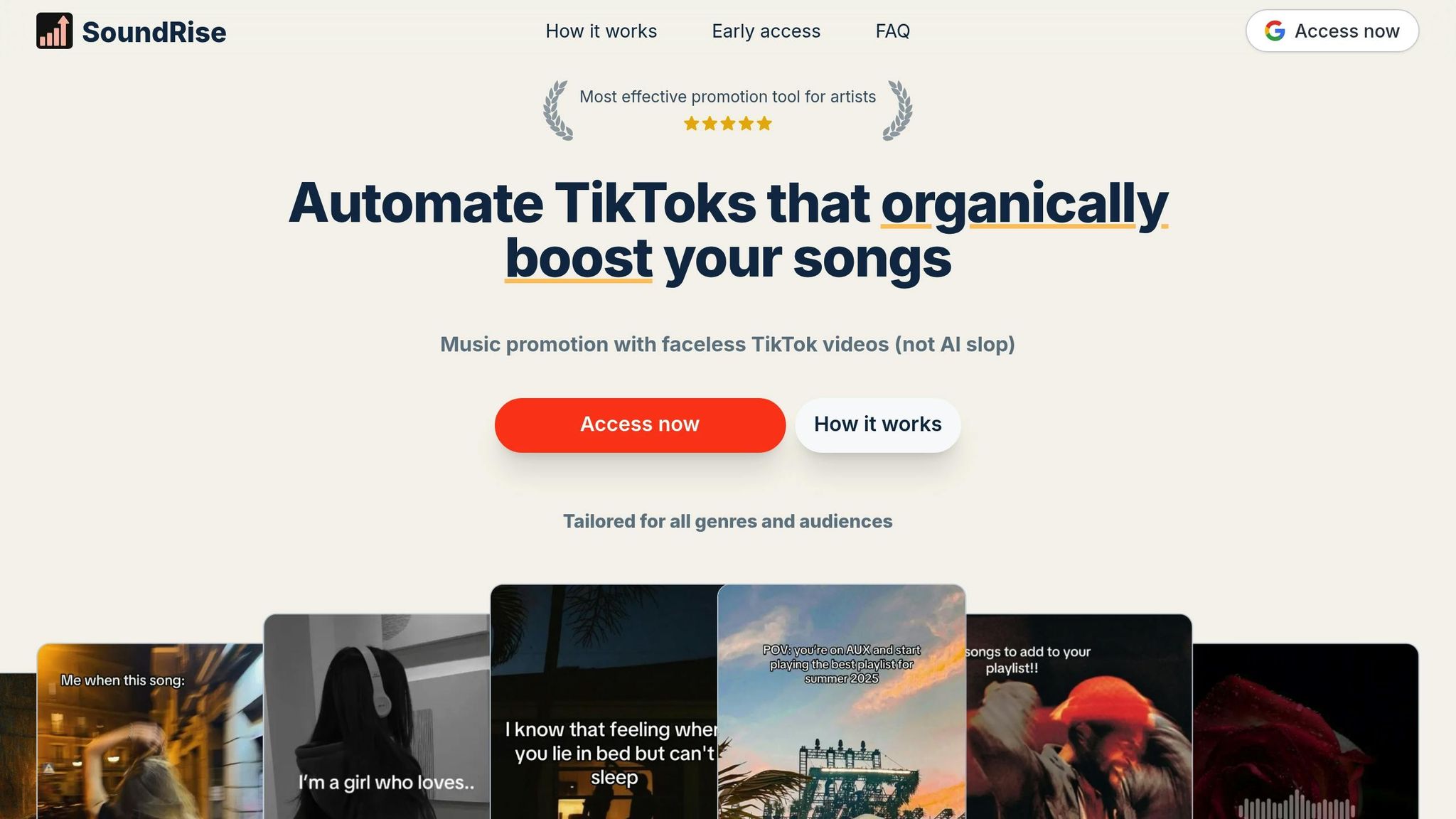
SoundRise simplifies TikTok content creation by automating sound-driven strategies. It uses AI to create faceless videos that pair your tracks with visuals tailored to TikTok’s algorithm. This eliminates the guesswork of matching audio to content. Plus, you can schedule posts to go live during peak engagement times, ensuring your sound-focused content reaches the right audience.
The platform also offers a content library filled with creative format ideas for specific sounds. You can experiment with unlimited slideshow drafts to test different approaches before finalizing your posts. With the Growth plan ($49/month), you get features like direct TikTok publishing and video scheduling, making it easier to maintain a consistent posting schedule - key for building momentum around your original sounds. Whether you’re working with pop, hip-hop, or niche genres, SoundRise helps you focus on organic growth, avoiding intermediaries or artificial plays.
Conclusion
Sound selection plays a crucial role in TikTok’s discovery system. With 88% of users regarding sound as an essential part of their experience, your choice of audio can determine whether your content gets amplified or fades into the background. Leveraging trending sounds creates "pattern velocity", connecting users through shared audio trends and proven creative formats.
There’s a balance to strike between short-term reach and long-term brand impact. While trending sounds can boost reach by 47% and increase engagement by 66%, original sounds excel in brand recall, with 68% stronger results, even if their initial reach is lower.
"Finding trending sounds isn't about discovering what's already viral (too late). It's about spotting the curve while it's rising, jumping in before saturation." – Cedric Yarish, Co-Founder, AdManage.ai
TikTok’s algorithm makes most distribution decisions within the first 24 hours, heavily influenced by early engagement. To maximize your chances of going viral, try to hop on trending sounds within their first 48 hours. Aim for a 70%+ completion rate by grabbing attention in the first 3 seconds. Tools like SoundRise can help streamline this process and keep your strategy on track.
Timing isn’t the only factor - compliance matters too. Always pick sounds labeled "Approved for Business Use" to avoid having your content muted or removed. For organic growth, test 2–3 trending sounds per week, or ramp up to 5–10 variations if you’re running paid campaigns.
FAQs
How do I find and use trending sounds on TikTok to boost my content?
To tap into trending sounds on TikTok, start by diving into the app's "Discover" page. This section is a goldmine for spotting popular videos and identifying audio that's picking up steam. Keep an eye on viral challenges and hashtags, as they often showcase the sounds everyone’s using.
For a more streamlined approach, tools like SoundRise can be a game-changer. They simplify content creation by helping you find and incorporate trending audio into your videos effortlessly. Combine this with staying active on TikTok, keeping an eye on emerging trends, and posting at the right time to boost your reach and engagement.
What are the long-term advantages of using original sounds for my brand on TikTok?
Using original sounds on TikTok is a smart way to give your brand a distinct voice and personality that connects with your audience. TikTok’s algorithm tends to reward content that feels authentic and inventive, and original sounds can drive higher engagement and boost your visibility over time.
When you use custom audio consistently, it strengthens your brand identity and helps you forge a more meaningful connection with your followers. This strategy taps into TikTok’s creative vibe while making your content more relatable and easier for users to remember.
How does TikTok's algorithm use sounds to boost content visibility?
TikTok's algorithm heavily prioritizes the use of trending or popular sounds, often boosting videos that incorporate them. Why? These audio tracks sync with current trends, making videos more likely to reach a broader audience. When you pair that with TikTok's quick analysis of engagement metrics - likes, comments, shares, and watch time - within the first moments of posting, using the right sound can give your content a noticeable edge.
But it's not just about jumping on the latest trend. The algorithm also evaluates how well the sound fits your video and whether it connects with specific communities or niches on the platform. For creators, this means exploring trending audio and weaving it into their content can greatly enhance visibility and engagement. The right sound doesn’t just make your video more discoverable - it helps it strike a chord with TikTok's vast and diverse audience.